Veritas Scholars Academy in Virginia
Online School in Virginia
If you’re comparing online schools in Virginia, you’re asking important questions about your child’s mind, faith, and future. Veritas Scholars Academy gives Virginia families live classes with expert teachers and fellow students, a classical Christian education from kindergarten through 12th grade, and an accredited diploma, all from home.

- Accredited by Middle States
- Live classes, grades 3-12
- Classes on Eastern Time
- Every class recorded
- Classical and Christian
- Enroll year-round
On This Page
Classical Christian Education, From the Shenandoah Valley to the Tidewater
Virginia has a large, well-established homeschool community, and many families here have been teaching at home for years. Some come to VSA wanting expert help as the subjects get harder. Others are leaving a school that’s no longer the right fit. Either way, you want an education that forms your child’s mind and faith together.
Veritas Press has helped families teach classically for more than 30 years, and Veritas Scholars Academy brings that education into a live online classroom. Students walk through history in order, beginning with Creation, read the great books, learn Latin, and grow in their ability to think, reason, and speak well. Every class is taught from a Christian worldview, by teachers who know their students by name.
Families choose how much VSA to bring home:
- Full-Time Diploma Program. A full course load with VSA, a personal Academic Advisor, and an accredited diploma and transcript at graduation.
- Part-Time live classes. Many Virginia homeschool families keep teaching most subjects and add a few live courses, often Omnibus, Latin, or upper-level math and science.
How VSA Works Under Virginia Law
Virginia’s homeschool law has a few more steps than some states, and it’s natural to want to get them right. VSA fits neatly into them. Virginia recognizes home instruction, a religious exemption, and a certified tutor as ways to meet its attendance law (Code of Virginia §22.1-254).
The Most Common Path
Home Instruction
- File a notice of intent with your division superintendent by August 15 each year, with a description of your curriculum (§22.1-254.1).
- Show that you meet one of four qualifications. One of them is providing a program of study delivered through a distance learning program, like VSA.
- By August 1 the following year, submit evidence of progress, such as a standardized test score or an evaluation by a qualified person.
- Keep up with Virginia’s immunization requirements.
VSA’s grades, transcripts, and teacher comments make the yearly evidence of progress straightforward.
Other Options
Religious Exemption or Certified Tutor
Families with sincerely held religious beliefs can ask their school board to excuse their child from school attendance under §22.1-254(B)(1). A parent who holds a Virginia teaching license can also teach under the certified tutor provision.
How a full-time VSA student fits these categories can depend on how you enroll, and your Family Consultant will walk you through it before you start.
Starting mid-year or leaving a Virginia public school? If you begin home instruction after the school year starts, file your notice of intent as soon as you begin. Talk with a Family Consultant first, so your notice and VSA start date line up. How switching to VSA works
Wondering how other states treat VSA students? Is My Student Considered a Homeschooler When in the Diploma Program?
A Diploma That Opens Doors
Virginia homeschool graduates usually receive a diploma issued by their parents. That’s a perfectly legal path, and many college-bound families still prefer an accredited diploma and transcript. It’s one of the most common reasons Virginia families choose VSA’s Diploma Program.
An Accredited Diploma
Full-Time Diploma students graduate with a diploma and official transcript from a school accredited by the Middle States Association since 2014. Honors, AP, and dual enrollment courses appear on the transcript with a weighted GPA.
Ready for College
VSA graduates have gone on to schools such as Harvard, Hillsdale, Wheaton, Grove City, and New Saint Andrews, and to the U.S. service academies. Your child’s Academic Advisor helps plan a course of study with their college goals in mind.
College Credit and NCAA
Eligible high school students can earn college credit through our dual enrollment partnership with Cairn University. VSA courses are also NCAA-approved (high school code 392122).
What VSA Costs for a Virginia Family
VSA tuition is priced by the course: a live Secondary course is $849 for the year, and a live Grammar course is $749. Full-Time Diploma students add a yearly enrollment fee for advising, records, and transcripts. Here are typical yearly totals.
| Plan | Yearly tuition | Paid in full | Monthly plan |
|---|---|---|---|
| Full-Time Grammar3 live courses + 3 You Teach Diploma courses + Premium Diploma enrollment | $2,866 | $2,791 | $904 at registration, then 9 payments of about $218 April 1 through December 1 |
| Full-Time Secondary5 live courses + 1 lab science + Premium Diploma enrollment | $5,972 | $5,822 | $1,319 at registration, then 9 payments of about $517 April 1 through December 1 |
| Part-Time2 live courses | $1,698 | $1,648 | $190 at registration, then 9 payments of about $167.55 April 1 through December 1 |
Families can pay in full and save on each course, or spread tuition across monthly payments with no interest. Learn about financial aid
Scholarships
Help With Tuition
Virginia doesn’t have an education savings account or voucher program for families. VSA offers its own scholarships each spring, and Family Consultants can walk you through payment plans and every way to make the numbers work.
A Common Question
“Is Online School in Virginia Free?”
VSA is a private school, so there is tuition. For the value of that tuition, families receive a classical education taught from a Christian worldview, live classes with teachers who know their students by name, and an accredited diploma.
And because VSA is priced by the course, many families find it costs well under the national average for private school tuition.
What a Week Looks Like for Virginia Students
Online school can be hard to picture until you see it. Here’s what a typical week looks like.
Live Classes, Twice a Week
Each live course meets twice a week at a set time, with the same teacher and up to 20 classmates all year. Students raise their hands, answer questions, and discuss ideas together.
Never Behind
Every class is recorded. If a winter storm knocks out the power or a military move or family trip gets in the way, your child watches the recording and stays on track.
Between classes, much of the work happens with books, paper, and pencil. Younger students sing their way through history and chant their Latin vocabulary. Older students read Homer and Augustine, work through formal logic, and learn to write and defend arguments of their own, the classical stages Dorothy Sayers described in “The Lost Tools of Learning” (1947).
Learning to Think Out Loud, Together
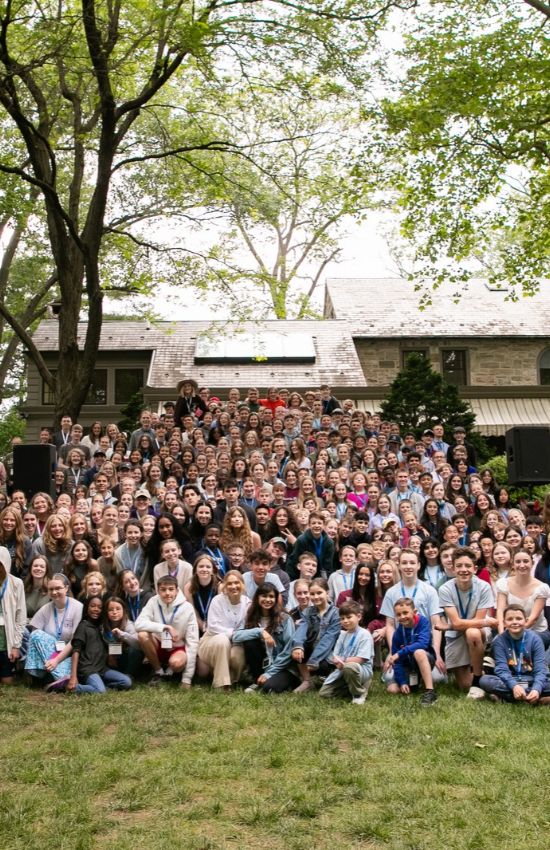
One of the biggest gifts of live classes is other students: classmates who’ve read the same book and want to talk about it. VSA students see the same classmates every week, and friendships grow from there. Clubs, field trips, and our End-of-Year Gathering bring students together outside class, and your child may find classmates across Virginia and across the country.
My sweet girl had always been very opinionated and headstrong, and homeschooling her was quite the challenge for me… She has grown more confident in her ability to communicate calmly and discuss and debate issues without getting emotionally involved.
Brandy H., parent of a VSA senior
Getting Started, One Step at a Time
Talk With a Family Consultant
Tell us about your child and your goals. A Family Consultant replies within 24 hours and can walk you through Virginia’s requirements alongside your course plan.
Apply and Find the Right Placement
We review your child’s records, and we may ask for a short placement test so your child starts in the right courses.
File Your Notice of Intent
If you’re homeschooling, file your notice of intent with your division superintendent by August 15, or as soon as you begin mid-year.
Build Your Child’s Plan
Full-Time students meet with an Academic Advisor to plan their courses and register for classes.
Questions Virginia Families Ask
Is online school free in Virginia?
Virginia has tuition-free public virtual options, which follow state standards and teach from a secular perspective. VSA is a private school with tuition, priced by the course, and offers a classical Christian education with live teachers and an accredited diploma. See what VSA costs.
How much does online school cost in Virginia?
It depends on the school and your child’s plan. At VSA, you pay for each live course, plus a yearly enrollment fee for Full-Time Diploma students. Our tuition calculator shows your real yearly number in a few minutes. Build your child’s plan.
What are Virginia’s homeschool laws?
Families who homeschool under Virginia’s home instruction statute file a notice of intent with their division superintendent by August 15 each year, with a description of their curriculum and proof that they meet one of four qualifications. By August 1 the following year, they submit evidence of progress, such as a standardized test score or an evaluation. Families can also homeschool under a religious exemption or with a certified tutor.
Can VSA count as my curriculum under Virginia’s home instruction law?
One of the four ways a parent can qualify under Virginia’s home instruction statute is by providing a program of study delivered through a correspondence course or distance learning program. Many families use VSA courses for that purpose. Your Family Consultant can help you describe your child’s VSA plan in your notice of intent.
Is VSA accredited?
Yes. VSA is accredited by the Middle States Association Commissions on Elementary and Secondary Schools (MSA-CESS), and our accreditation applies to students wherever they live, including Virginia. How accreditation works at VSA.
Can I use state funds for VSA in Virginia?
Virginia doesn’t have an education savings account or voucher program for families. Families pay tuition directly, with options to pay in full or monthly, and VSA offers its own scholarships each spring. Learn about financial aid.
What time are classes in Virginia?
Class times are listed in Eastern Time, the same time zone as Virginia, so the time you see is the time your child logs on. Courses are usually offered at several times, so families can choose what fits.
Can my child start in the middle of the year?
Yes. VSA welcomes new students throughout the year. Students can join classes in progress, catch up with recorded lessons, and work with their teachers on any makeup work. How switching works.
Let’s Build Your Virginia School Plan Together
A Family Consultant would love to hear your child’s story, walk you through Virginia’s requirements, and help you find the right next step, whether that’s next month or next fall.
Keep Exploring
More About VSA
Start Any Time
Switching Schools
How families move to VSA mid-year or next fall, from first call to first class.
See how switching works
Real Numbers
Tuition
Build your child’s plan and see a real yearly cost in a few minutes.
Build your plan
Also helpful: Elementary · Middle School · High School · Diploma Program · ESAs and School Choice